Identify the concern
Differentiate active acne, flat marks, melasma and texture scars. Evidence for acne peels does not prove effectiveness for every other diagnosis.
Updated
Choose a peel around the concern, the formulation and your skin response.
A chemical peel applies a solution to produce controlled exfoliation. Suitability depends on the concern, skin condition, formulation and depth, not the ingredient name alone. Peels may support care for selected acne or pigment concerns, but can cause irritation, burns and pigment changes. A fixed course cannot guarantee results.
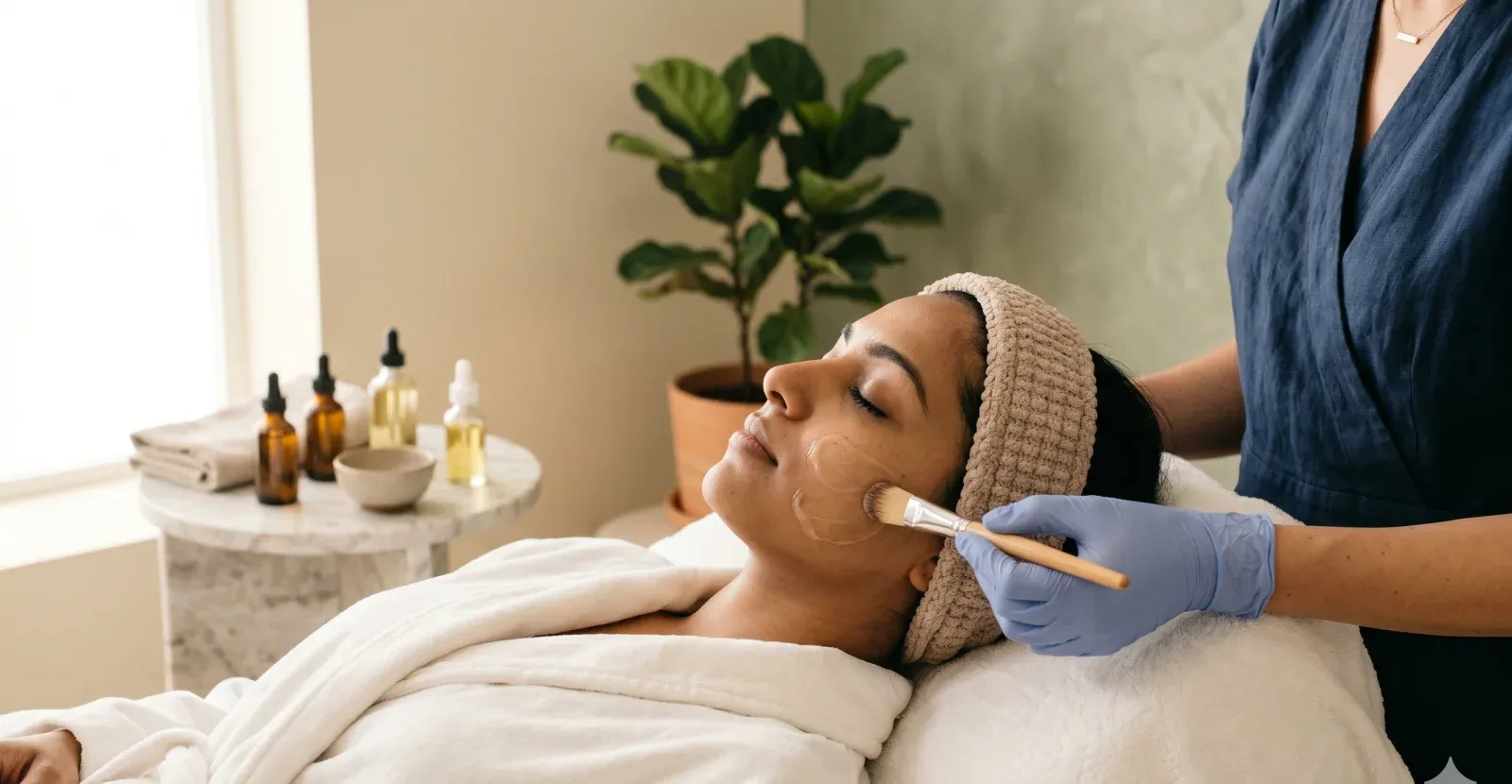
Glycolic, mandelic and salicylic are ingredient names, not complete treatment plans. Concentration, formulation, contact time and the condition being treated can change the effect and recovery.
Discuss what a peel could add to your existing care and whether a simpler option is suitable. Visible peeling is not a reliable measure of success, and a deeper peel is not automatically a better choice.
Differentiate active acne, flat marks, melasma and texture scars. Evidence for acne peels does not prove effectiveness for every other diagnosis.
Ask what solution and depth are proposed, what benefit is plausible and what alternatives exist. Research does not establish one acid as the best peel for all Indian skin.
Obtain specific instructions about prescribed actives, hair removal, sun exposure and skincare. Do not copy a generic stopping or restarting timetable.
Assess irritation, pigmentation and the original concern before deciding whether another session is worthwhile.
List current products, medicines, recent procedures and any history of cold sores or abnormal healing.
Stinging, redness and flaking vary with the peel. Burns, infection and pigment changes are possible. Follow aftercare and seek advice for worsening pain, blistering or discharge.
The outcome and treatment interval depend on the diagnosis and response. More peeling or more sessions does not guarantee greater benefit.
Ask for an individual estimate after discussing the concern, treatment area and proposed peel. Clarify whether the estimate is per session and whether products, aftercare or follow-up are included before agreeing to treatment.
No universal winner is established. The complete formulation, treatment depth and your skin response matter, as does the condition being treated.
A superficial peel should not be expected to correct deep or tethered scars. Scar type needs assessment before choosing a procedure.
Professional-strength peels can cause burns and lasting pigment changes when used incorrectly. Discuss an appropriate home routine rather than attempting an in-clinic procedure yourself.
Small, varied trials did not establish a reliable overall winner among common peels. Acne findings cannot automatically determine the right peel for melasma or another pigment condition.
This systematic review found varied, limited evidence across treatments. Procedures can also worsen pigmentation; published response rates are not predictions for an individual patient.
Supports photoprotection and supervised medical treatment, with lasers reserved for selected resistant cases. Expert consensus does not establish one treatment sequence for everyone.
Area-specific notes on what we see and how we treat for patients from each part of the south-east Bengaluru corridor:
Most plans at SkinWise begin with a focused consultation. We map the concern, talk through what you’ve tried, and only then suggest what comes next — no oversell.
Plan your first visit: appointments, clinic location and what to bring.