Hirsutism
Updated · SkinWise Clinic
Hirsutism describes coarse hair growth in an androgen-sensitive pattern in women. It can occur with PCOS or other causes, including normal individual variation. Assessment considers onset, progression and associated symptoms. Hair reduction and treatment of an underlying hormonal concern are separate decisions.
A few unwanted hairs do not by themselves diagnose a hormone disorder. A new or rapidly increasing pattern, menstrual changes or other symptoms can make further evaluation more relevant.
Discuss what bothers you and what treatment burden is acceptable. Shaving, other removal methods, laser and selected medicines differ in suitability and ongoing needs.
How hirsutism shows up
- Coarser hair on the face or other androgen-sensitive areas
- Increasing hair growth over time
- Sometimes associated acne, scalp thinning or menstrual changes
Common causes
- PCOS or other androgen-related conditions
- Individual or familial hair-growth patterns
- Certain medicines
- Less common hormonal disorders needing assessment
When to see a dermatologist
Seek medical assessment for rapidly increasing hair, voice deepening or other marked changes. Persistent unwanted growth or accompanying menstrual changes also merits a consultation.
How hirsutism is treated at SkinWise
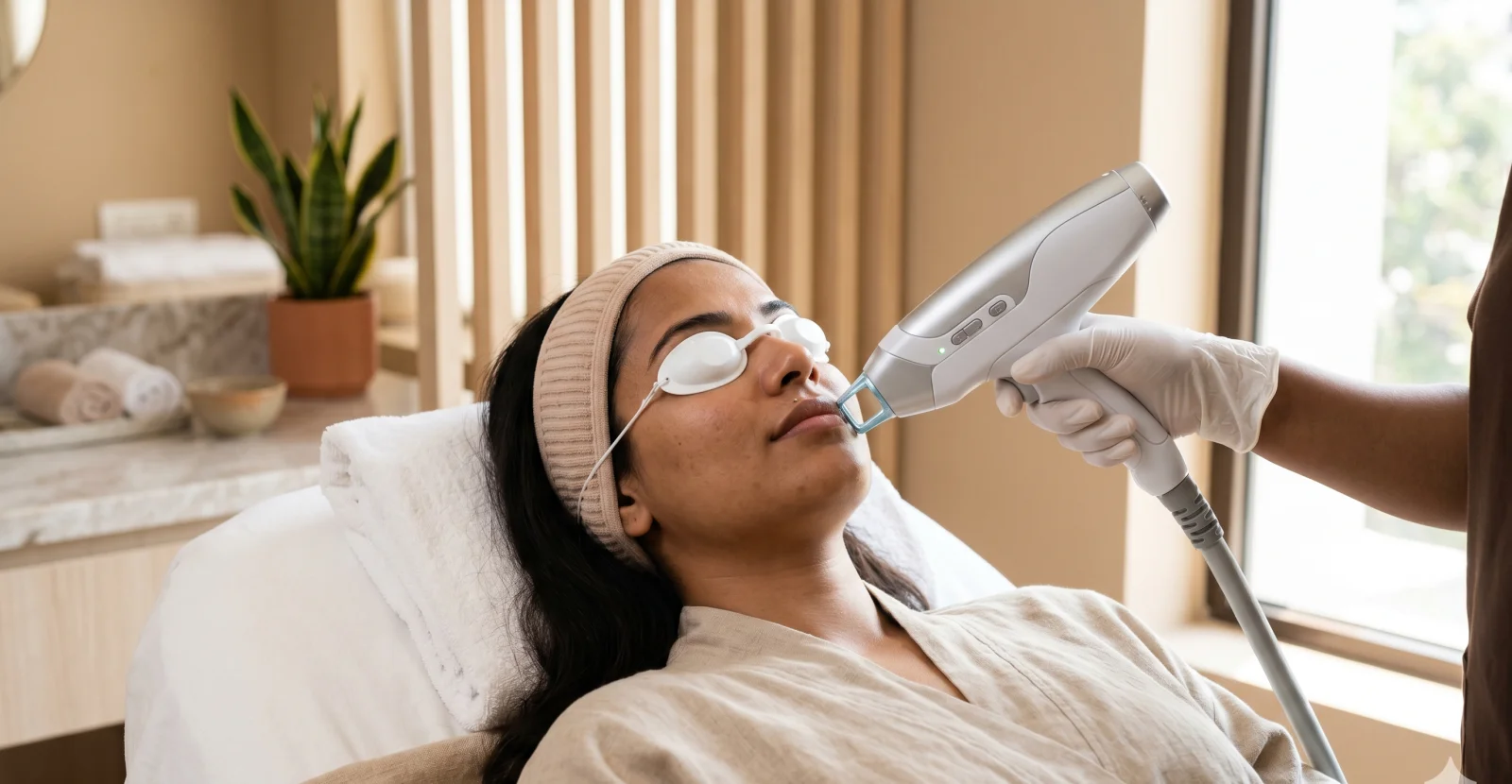
Assessment helps determine whether tests or wider medical care are needed. Laser may suit selected pigmented hair, but response and maintenance vary. Medicines need an individual risk discussion, including pregnancy plans and contraception.
Services that treat hirsutism
Evidence behind these choices
- Hirsutism: Endocrine Society practice guideline (2018)
Guidance for premenopausal women connects hair reduction with appropriate hormonal assessment. Wavelength, cooling and the risk of increased hair growth need discussion for relevant skin and hair types.
- International evidence-based PCOS guideline (2023)
PCOS care addresses reproductive, metabolic and psychological health as well as skin symptoms. Laser may help facial hirsutism, but response and maintenance vary; hair symptoms alone do not diagnose PCOS.
- Long-term laser hair reduction: systematic review (2022)
Only five trials met the long-term review criteria. Outcomes varied with treatment and body site, so a fixed reduction percentage or permanent hair-free result cannot be promised.
Read more
Frequently asked questions
Is all facial hair PCOS?
No. Hair characteristics and associated symptoms guide whether further assessment is needed.
Can laser cure a hormonal disorder?
No. It can reduce selected hair but does not treat every underlying cause.
Can facial laser cause more hair?
Paradoxical increased growth is a recognised risk. Ask about it when weighing the expected benefit, particularly for fine hair.
Ready to start with a consult?
A focused first consultation is where we slow down, map your concern and build the smallest plan that will actually move the needle. No oversell, no fixed menu.