Published · Updated · SkinWise Clinic
Laser hair reduction for Indian skin: suitability and expectations
Laser hair reduction aims to reduce growth over time by targeting pigment in hair follicles. It does not guarantee permanent removal of every hair. Skin tone, hair colour and thickness, body area, device and hormonal context all influence the decision.
Skin and hair need individual assessment
Indian patients have a range of skin tones and treatment histories. Recent tanning, earlier pigment reactions and the specific hair being targeted matter more than assigning one setting to a nationality. Very light, grey or white hair is usually a poor target for pigment-based laser treatment.
The Endocrine Society hirsutism guideline discusses longer-wavelength choices and appropriate cooling in relevant darker skin types. This is not evidence that a named wavelength is safe under every setting, or confirmation of which devices a clinic owns.
How much reduction is realistic?
A systematic review of long-term outcomes found only five eligible trials, with variation across body sites and interventions. Its results cannot justify a fixed percentage promise for every patient. Repeat treatment and maintenance can be needed.
For facial hirsutism in PCOS, the 2023 international guideline recognises a role for laser, while noting that more sessions may be needed than for some other causes. Reducing hair does not replace assessment or treatment of the wider condition.
Preparation questions
Before treatment, describe prior burns or pigment changes and disclose medicines, pregnancy and relevant skin problems. Ask which device is proposed, why it fits the area and whether a test spot is appropriate. Obtain specific instructions about shaving, waxing or plucking, tanning and products. AAD preparation guidance.
Recovery and risks
Redness and swelling can occur. Burns, pigment changes and scarring are possible. Increased hair growth in or around a treated area, called paradoxical hypertrichosis, is a recognised concern to discuss, especially when facial or neck hair is fine and expected benefit is uncertain. A test spot does not eliminate every risk. Hirsutism guideline.
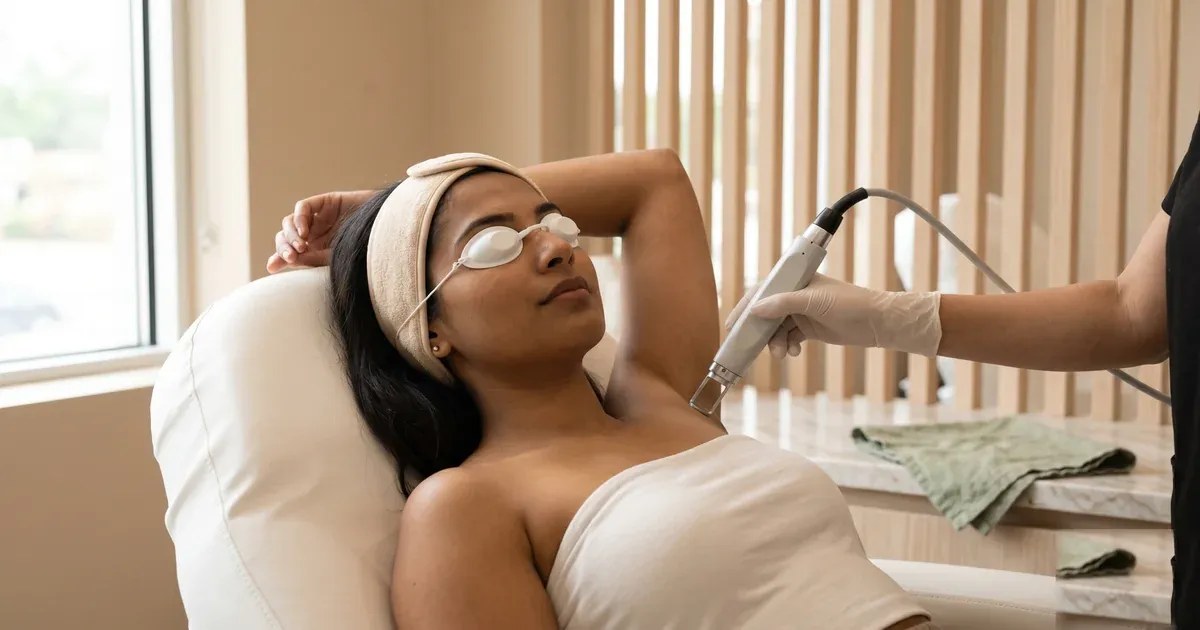
Ask about eye protection, cooling, who performs treatment and the contact route for an unexpected reaction. Follow individual aftercare and seek advice for blistering, increasing pain or other worsening changes. Do not rely on a universal next-day-work or no-downtime promise.
Decide after the assessment
The laser hair reduction page explains the process at SkinWise. The diode versus Nd:YAG guide helps frame equipment questions, while the cost-factor guide explains what to include in an estimate.