Acne
Updated · SkinWise Clinic
Acne affects hair follicles and can produce blackheads, whiteheads, inflamed spots and deeper lumps. It may also leave flat pigment changes or texture scars. Treatment depends on severity, scarring risk, previous response and the effect on daily life; several effective medical options exist.
Acne can affect the face, chest or back. It is not a sign of poor hygiene, and repeated scrubbing may irritate the skin. Hormones, genetics and some medicines can contribute; a jawline pattern alone does not establish PCOS.
Dark marks and pits may remain after a breakout settles. They are different from ongoing acne and should be assessed separately when choosing treatment.
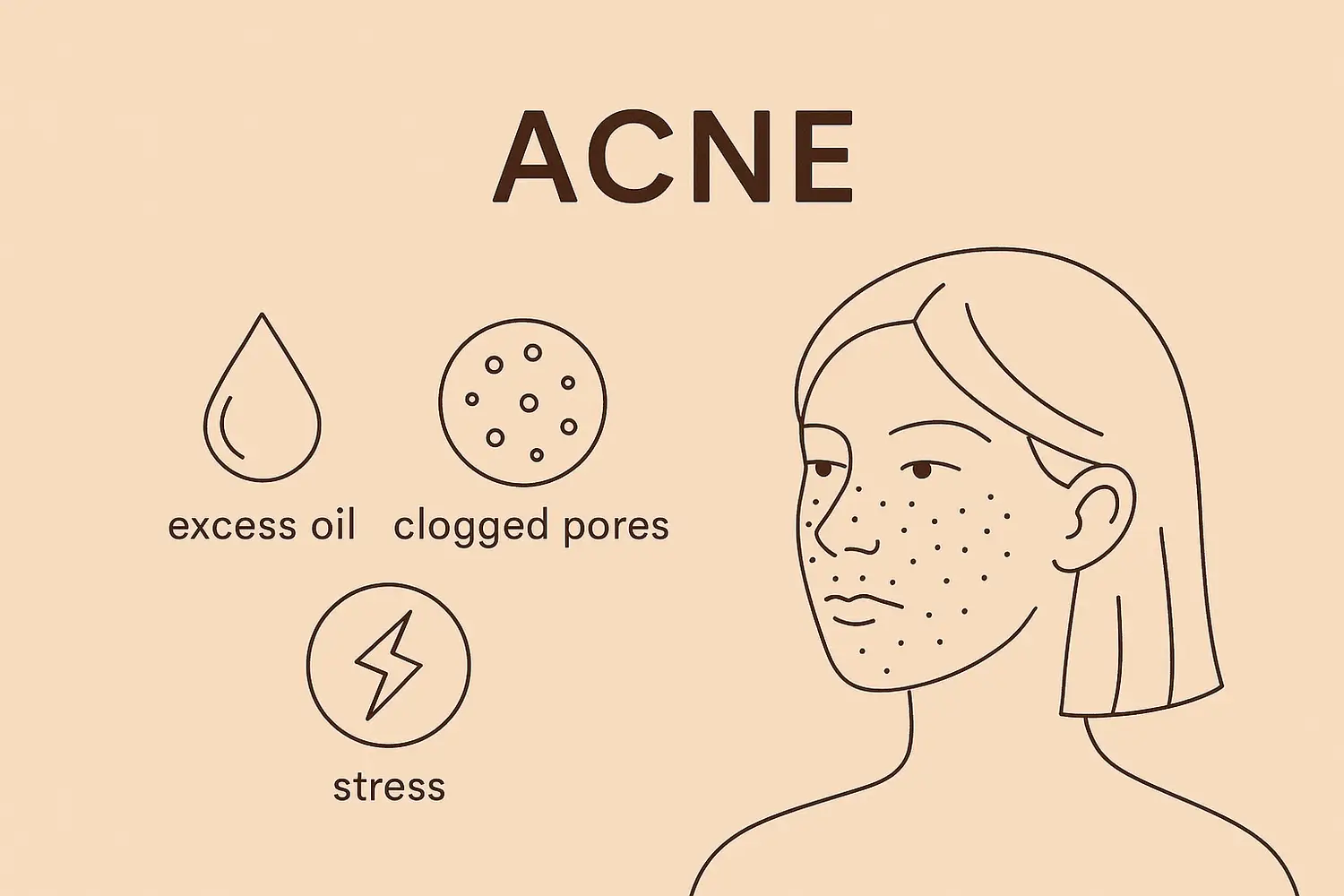
How acne shows up
- Blackheads and whiteheads
- Inflamed papules or pustules
- Deeper, painful nodules
- Flat marks or texture changes after inflammation
What triggers acne
- Changes in follicular oil production and blockage
- Inflammation involving the follicle and its microbial environment
- Hormonal influences and family tendency
- Some medicines and occlusive products or friction
When to see a dermatologist
Arrange assessment for persistent acne, painful deeper spots, scarring or distress. Seek prompt advice for rapid worsening, marked swelling or a painful rash with fever.
How acne is treated at SkinWise
At SkinWise, assessment guides an appropriate topical or systemic plan and its follow-up. Antibiotics need appropriate combinations and limits; severe or scarring acne may warrant other systemic treatment. Procedures for established scars are a separate decision.
Services that treat acne
Evidence behind these choices
- Acne treatment: American Academy of Dermatology guideline (2024)
Supports treatment matched to acne severity and impact, appropriate combinations and limiting antibiotic use. These general points also appear in the AAD's current guidance; consult the linked correction alongside the original paper.
- Post-inflammatory hyperpigmentation in skin of colour (2024)
This systematic review found varied, limited evidence across treatments. Procedures can also worsen pigmentation; published response rates are not predictions for an individual patient.
- Post-acne scar management in skin of colour (2020)
Scar shape, depth and skin response guide procedure selection. This evidence review includes expert judgement where trials are limited and does not support a fixed session count or complete scar removal.
Read more
Frequently asked questions
Does acne mean my skin is dirty?
No. Washing harder does not remove the underlying causes and can irritate the skin. A tolerable routine supports the treatment selected for your acne.
Are brown marks acne scars?
Flat colour changes are usually different from pits or raised scars. They can coexist, and examination helps decide which concern needs treatment.
Is clear skin guaranteed after a set number of weeks?
No. Response depends on severity, treatment and tolerance. Agree when to review and what changes need earlier advice.
Ready to start with a consult?
A focused first consultation is where we slow down, map your concern and build the smallest plan that will actually move the needle. No oversell, no fixed menu.