
Alopecia areata
Updated · SkinWise Clinic
Alopecia areata is an immune-mediated form of hair loss, often appearing as discrete patches. It can affect the scalp and other hair-bearing areas. Its course is unpredictable; assessment distinguishes it from other causes and considers extent, activity and wellbeing.
A smooth patch of hair loss may be alopecia areata, but infection, traction and other conditions can look similar. Scalp examination helps guide the diagnosis.
Regrowth can occur, and recurrence is also possible. An individual prognosis cannot be reduced to a fixed percentage or a timetable for everyone.
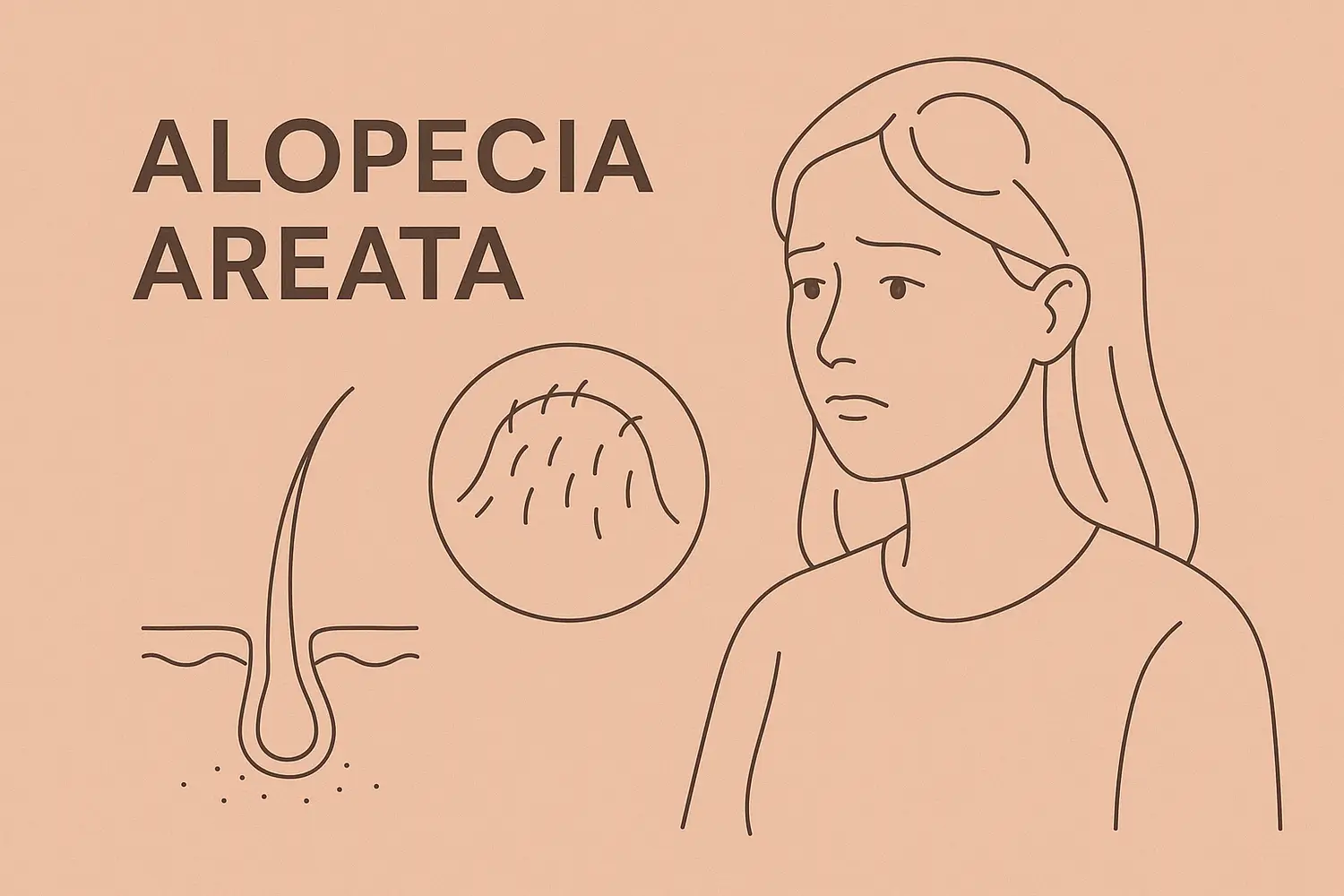
How alopecia areata shows up
- Discrete patches of hair loss
- Possible eyebrow, eyelash or body-hair involvement
- Nail changes in some people
What's known about the cause
- Immune effects on hair follicles
- Genetic susceptibility
- Other autoimmune conditions may coexist in some patients
When to see a dermatologist
Arrange assessment for new patchy loss or rapid progression. Pain, scale, discharge or scarring should prompt review for other possible causes.
How alopecia areata is treated at SkinWise
The plan considers extent, speed of change and impact. Observation or selected topical, injected or systemic treatment may be discussed. Medicines for severe disease require a separate safety and monitoring assessment; pattern-loss PRP evidence does not establish treatment for alopecia areata.
Services that treat alopecia areata
Evidence behind these choices
- Alopecia areata: S3 diagnostic guideline (2026)
Supports diagnosis and assessment specific to alopecia areata. Evidence about pattern hair loss should not be assumed to establish treatment of patchy autoimmune hair loss.
Read more
Frequently asked questions
Will the hair definitely regrow?
Regrowth is possible but not guaranteed. Course and response vary, and relapse can occur.
Is PRP the standard treatment?
Studies cited for PRP on this site concern pattern loss, not a standard alopecia-areata treatment. The diagnosis requires its own options discussion.
Do I need an extensive blood panel?
Tests depend on symptoms, examination and associated concerns rather than one routine panel for everyone.
Ready to start with a consult?
A focused first consultation is where we slow down, map your concern and build the smallest plan that will actually move the needle. No oversell, no fixed menu.