
Urticaria (hives)
Updated · SkinWise Clinic
Urticaria, or hives, causes transient itchy wheals, sometimes with deeper swelling called angioedema. Recurrent symptoms lasting beyond six weeks are considered chronic. Possible causes and treatment depend on the pattern; chronic spontaneous urticaria is not automatically a food allergy.
Photographs help when the rash disappears before an appointment. Record how long each lesion lasts, associated swelling, medicines and any reproducible trigger.
A rash that remains fixed, bruises or is painful needs reassessment because other conditions can resemble hives.
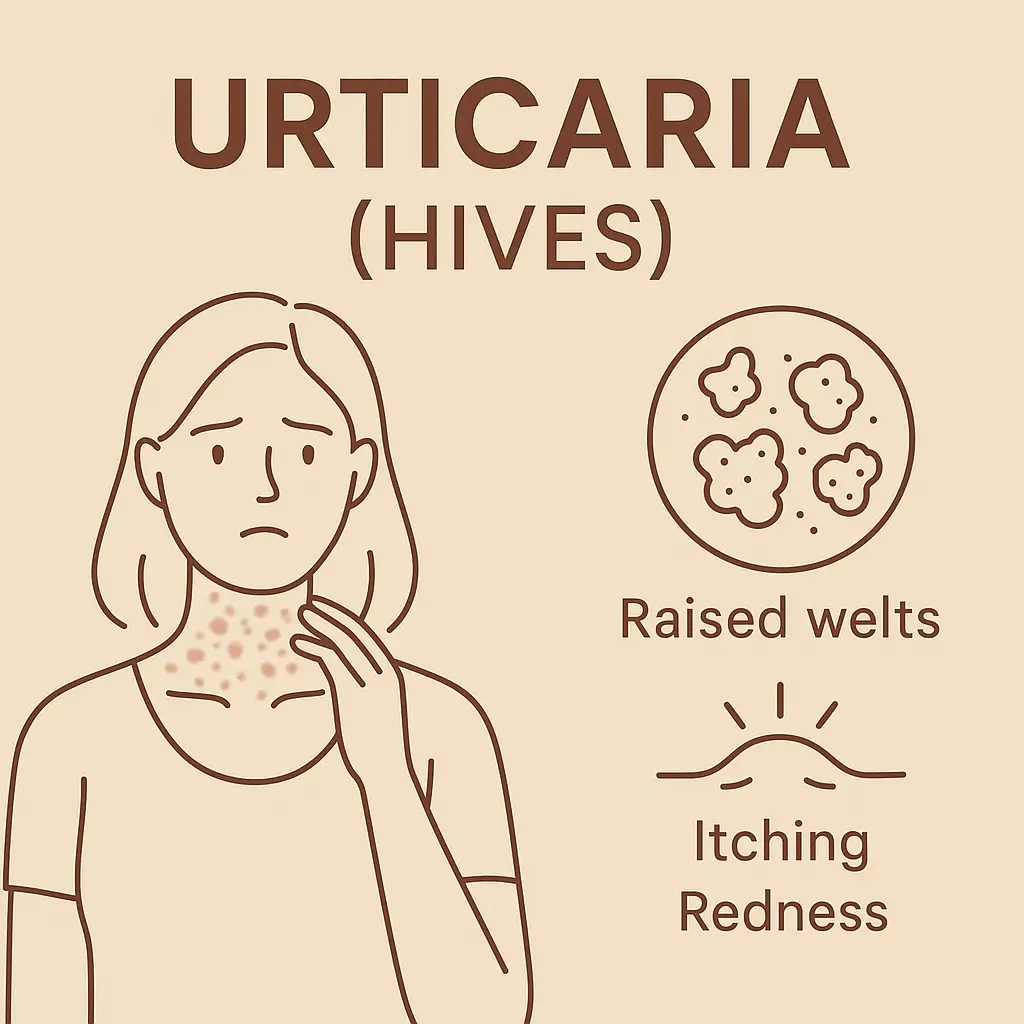
How urticaria shows up
- Itchy raised wheals that come and go
- Possible swelling of lips or eyelids
- Recurring symptoms or a reproducible physical trigger
Common triggers and contributors
- Infections or medicine reactions in some acute cases
- Spontaneous mast-cell activation in chronic disease
- Physical triggers in inducible forms
When to see a dermatologist
Breathing or swallowing difficulty, tongue or throat swelling or faintness requires emergency care. Arrange assessment for recurrent hives, persistent swelling, a new medicine-associated rash or lesions that remain fixed or bruise.
How hives is treated at SkinWise
An appropriate non-sedating antihistamine is often part of care. Persistent symptoms need clinician-guided reassessment and possible treatment adjustment or specialist options. Do not increase doses yourself. Broad food exclusions and indiscriminate allergy panels are not a substitute for a clinical history.
Services that treat hives
Evidence behind these choices
- Urticaria: international guideline (2026)
Classification and investigation guide treatment. Persistent hives may need clinician-directed changes; this is not permission to increase antihistamine doses without assessment.
Read more
Frequently asked questions
Should I multiply my antihistamine dose?
No. Any dose adjustment must be directed by a clinician who has assessed the diagnosis, medicines and risks.
Is a food allergy always responsible?
No. Investigation should follow the history and pattern rather than assuming every recurrent case is food-related.
Will it end by a fixed date?
The course varies. A follow-up plan aims to control symptoms and reassess treatment needs.
Ready to start with a consult?
A focused first consultation is where we slow down, map your concern and build the smallest plan that will actually move the needle. No oversell, no fixed menu.