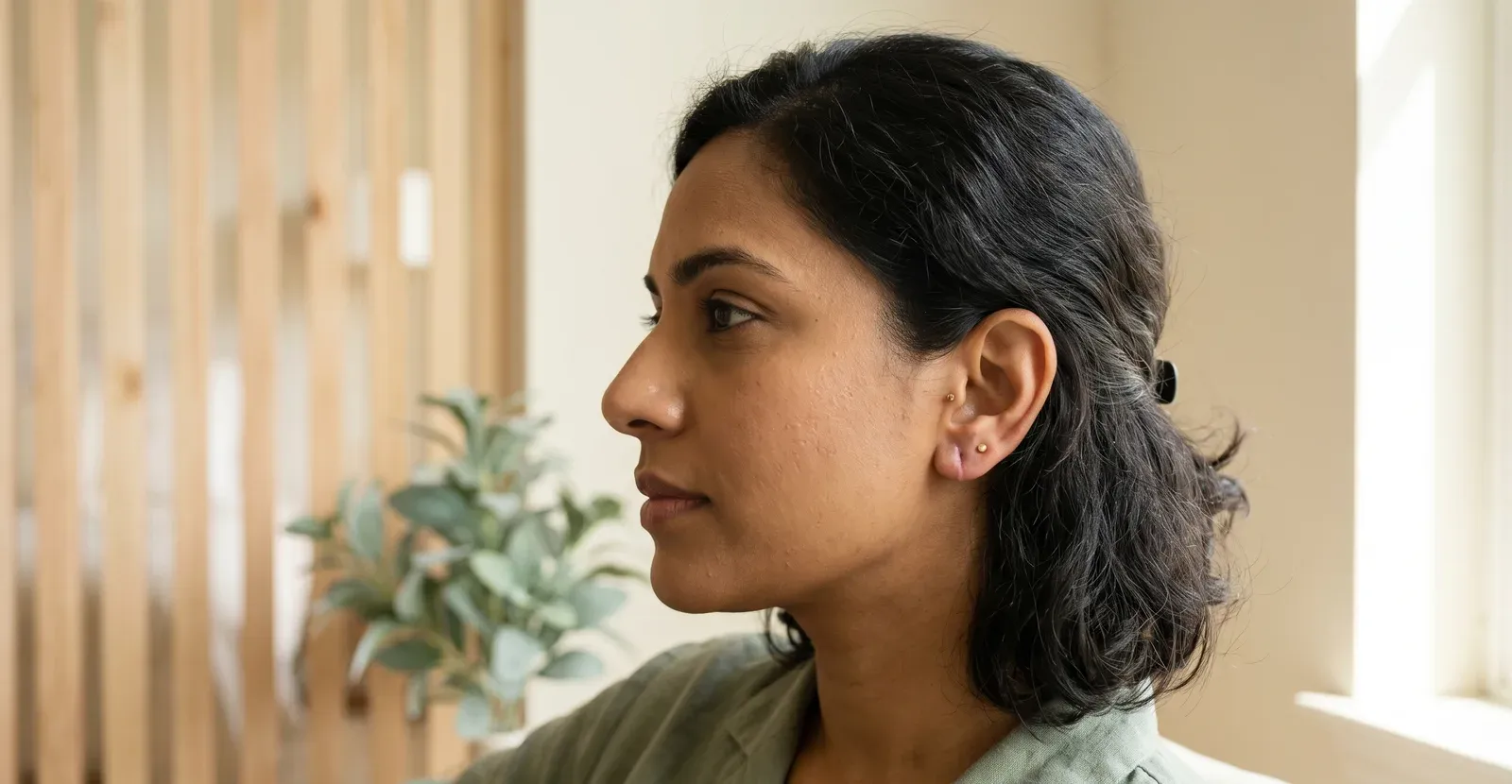
Small tears deserve thoughtful attention — and a neat repair.
Earlobe repair at SkinWise is an in-clinic minor surgical procedure for torn, stretched or split earlobes — usually from heavy earrings or accidental pulls. The procedure takes 30–45 minutes under local anaesthesia. Re-piercing is safe at 8–12 weeks after healing, and scarring is minimal with careful technique.
Heavy earrings, an unlucky tug, years of wear — earlobes give in quietly. A single piercing stretches into a slit; a split lobe forms over time; an old piercing site grows a small keloid. None of it is dramatic, but it changes how earrings sit and how the ear looks in a photograph, and it’s rarely something patients want to live with.
Earlobe repair is one of the most satisfying small procedures we do. It takes 30–45 minutes in clinic, runs under local anaesthesia, and uses fine sutures to rebuild a neat, natural-looking lobe. Most patients walk out wearing a small bandage and resume normal life by the next morning.
It is also where we’re strict about timing — re-piercing happens 6–8 weeks after the repair, and at a different site than the original hole. Going back to the same spot is the most common reason a repaired earlobe splits again.
Stretched earring holes that no longer hold a stud comfortably
Fully split (torn-through) earlobes from heavy earrings or accidents
Keloid scars at old piercing sites
Asymmetric or elongated piercing holes after years of wear
Pre-event repair before weddings or major functions
Patients who plan to re-pierce after healing
Where we adjust the plan:
Active infection in the lobe — we treat the infection first and book the repair once the area is calm.
Keloid-prone patients with very active scar tendency — we plan a steroid co-injection course alongside repair, and discuss honest expectations about recurrence.
How we approach earlobe repair
1. Examine and plan the scar line
Where the suture line falls matters for both healing and how the lobe looks later. We mark and plan before the first anaesthetic — for many patients we plan a small Z or stepped closure to avoid a straight, contracting scar.
2. Local anaesthesia, fine sutures
Local anaesthesia (no general anaesthesia, no hospital visit). The repair uses very fine sutures, layered where needed for a neat, low-tension closure that heals into a discreet line.
3. Bandage and short downtime
The ear stays bandaged for 5–7 days. Sutures come out at the 7-day review. Most patients are back at work the next morning and only avoid earphones over the lobe for the first week.
4. Re-piercing at a new site, 6–8 weeks later
Re-piercing is done at a different site than the original — going back to the same scar is the commonest reason a repaired lobe splits again. We do the re-piercing in clinic with sterile technique.
What to expect
Procedure day
30–45 minutes in clinic. Local anaesthetic, careful repair, small bandage applied before you leave.
Days 1–7
Keep the area dry, sleep on the opposite side, no earphones pressing on the lobe. Mild tenderness for the first 48 hours.
Day 7
Suture removal at a short follow-up review. The scar looks pink and slightly raised — this softens over the next 6–8 weeks.
6–8 weeks
Scar matured, ready for re-piercing at a fresh site if desired.
Frequently asked questions
Will it leave a visible scar?
There is always a fine scar — but with a planned closure and good aftercare, it softens to a discreet line by 6–8 weeks. Most patients find it disappears almost completely under earring wear.
How long before I can wear earrings again?
Re-piercing at a fresh site is done 6–8 weeks after the repair. Going back to the same hole is the most common reason a repaired lobe splits again, which is why we move the new piercing to a slightly different spot.
Is the procedure painful?
The local anaesthetic stings briefly. After that, the repair itself is painless. Most patients describe the experience as quick and easier than they expected.
Can I get both ears done on the same day?
Yes — and most patients prefer it, since the recovery overlaps. We book extra time when both ears are being repaired.
Will it tear again if I wear heavy earrings?
It can — a repaired lobe is not stronger than the original. We recommend lighter earrings, posts rather than hoops for daily wear, and saving heavy jhumkas for shorter occasions.
I have keloid scarring at my piercing site. Can it still be repaired?
Yes, with a planned course of steroid co-injections alongside the repair. Keloids carry a real risk of recurrence, and we discuss this honestly before booking.
Most plans at SkinWise begin with a focused 15-minute consultation. We map the concern, talk
through what you’ve tried, and only then suggest what comes next — no oversell.