
Published · Updated · SkinWise Clinic
Chemical peels for Indian skin: results, risks and recovery
A chemical peel uses a solution to produce controlled exfoliation. Its value depends on the condition being treated and how the skin responds. A strong sensation or visible shedding is not proof that the treatment is working better.
Start with the concern
A peel for selected acne is not the same decision as a peel for melasma, flat post-acne marks or scar texture. Active inflammation may need medical treatment first. Deeper or tethered scars can need different procedures. The chemical-peel service guide sets out the assessment process.
A systematic review of acne-peel trials found small, heterogeneous studies and no dependable overall winner among common peels. Those acne findings should not be extended to every pigmentation condition.
Before-and-after results: what can a photo tell you?
A before-and-after photo cannot predict your own result. Ask whether the concern, peel and treatment interval are comparable, and whether lighting, makeup or other treatments changed between images. A photo of improved acne does not establish the same benefit for melasma or deep scars.
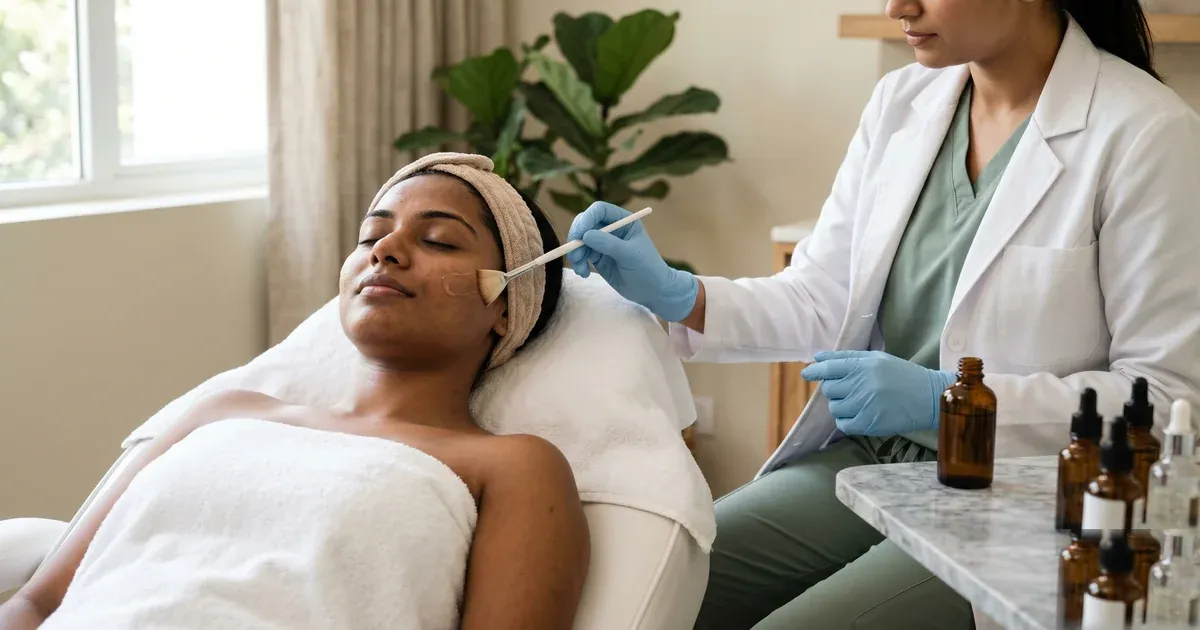
The image on this page is an illustration, not a patient’s treatment result. For your own progress, discuss how to record changes consistently and assess them alongside symptoms and any irritation.
Ingredient names do not describe the whole procedure
Glycolic, mandelic or salicylic acid names leave out concentration, formulation, contact time and depth. Skin condition and previous reactions also influence the choice. Ask what is actually proposed and why it is appropriate, rather than selecting a product by popularity.
For post-inflammatory pigment, irritation can worsen the problem being treated. For melasma, medical care and photoprotection remain central; a peel is a possible selected adjunct, not a cure.
Questions to settle before a session
- What improvement is plausible for my diagnosis?
- Which peel and depth are proposed, and what alternatives exist?
- How do current medicines, recent procedures or tanning affect timing?
- What should I pause or restart, and when?
- What recovery range should I allow before work, travel or an event?
- Who should I contact for an unexpected reaction?
Bring product labels and previous treatment details. Mention pregnancy or breastfeeding and any history of cold sores or abnormal healing. The clinic should give instructions for the actual procedure rather than a generic online timetable.
Recovery and repeat treatment
Stinging, redness and flaking vary. Burns, infection, darker or lighter patches and scarring are possible, particularly when a treatment is unsuitable or causes excessive injury. The FDA warns against unsupervised high-strength chemical peels.
Follow the individual aftercare instructions. Seek advice for worsening pain, blistering, spreading redness or discharge. Sun protection remains part of care; do not deliberately remove peeling skin to speed recovery.
There is no fixed course that guarantees clear skin. Review the original concern and any adverse effects before another session. Read glycolic versus mandelic for a comparison, or plan a consultation before choosing treatment.
Considering a chemical peel in Bengaluru?
At SkinWise Clinic in Mitta Plaza, Carmelaram, start with an assessment of the concern and your previous treatment. The chemical-peel consultation and treatment guide explains what to discuss before a procedure. Plan your first visit for booking and preparation details.