
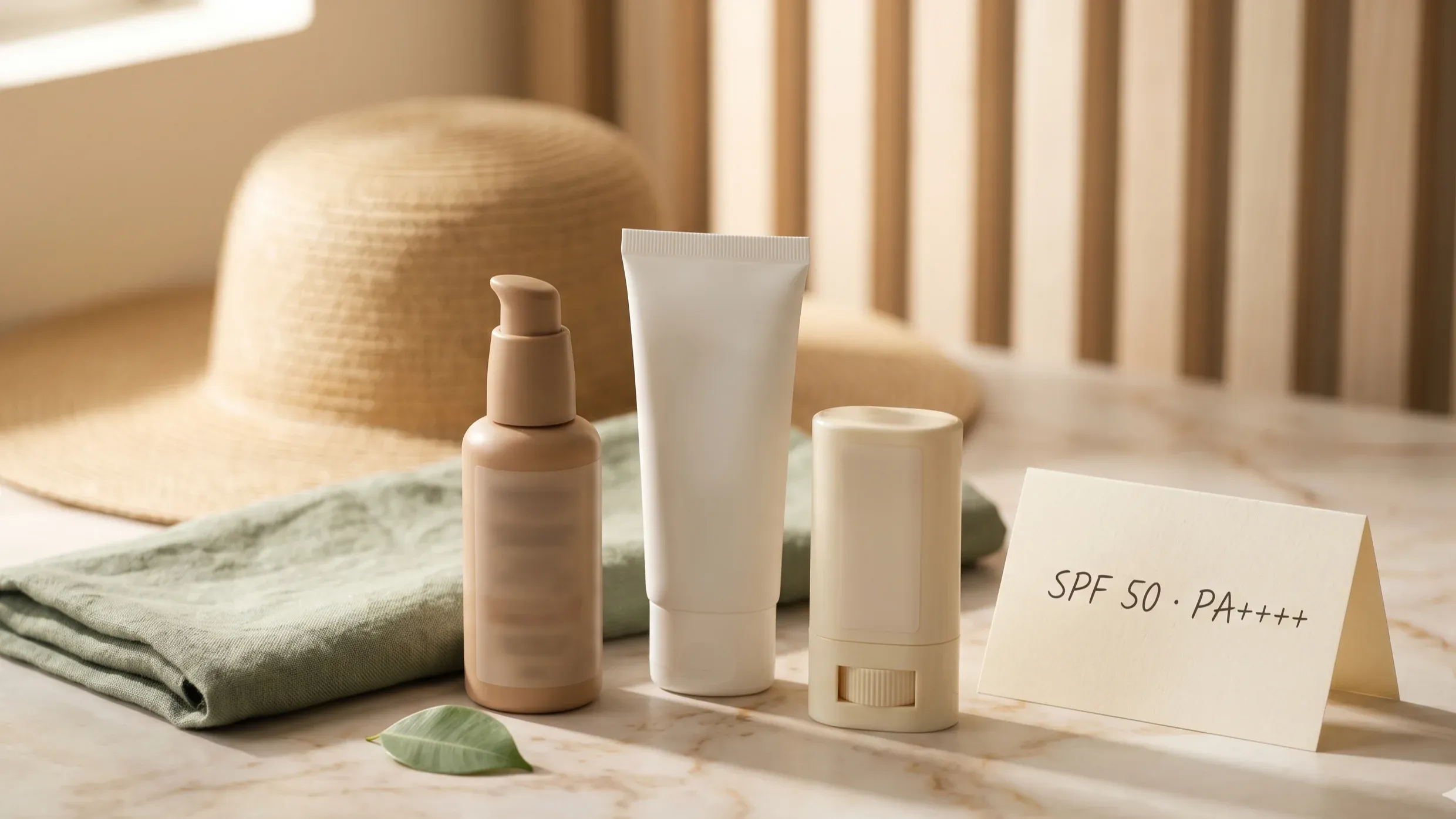
Sunscreen for Indian skin: the only guide you actually need

Sunscreen for Indian skin: the only guide you actually need

If we had to recommend just one thing for almost every patient who walks into SkinWise — for acne, melasma, hair loss, post-peel care, after laser, before a wedding, for the next forty years — it would be sunscreen. Used correctly. Daily. With a reapplication.

That sentence sounds boring. It isn’t. The single biggest upgrade most Indian patients can make to their skin isn’t a fancier serum or another laser — it’s actually finishing the sunscreen bottle they bought and reapplying through the day.

This is everything we wish every patient knew when they walk in for their first consult.

Why sunscreen matters more for Indian skin

Common misunderstanding: “Indian skin already has melanin. We don’t burn easily. Why bother?”

Two reasons.

First, while melanin gives Indian skin meaningful natural protection against sunburn (roughly equivalent to SPF 4–8), it does not protect against the slower damage UV does over years — collagen breakdown, irregular pigmentation, melasma, photo-aging. The longer wavelengths (UVA) penetrate deeper into the skin and don’t cause the visible sunburn that lighter skin gets; they cause the invisible damage that shows up as dark patches, fine lines, loss of glow in your 30s and 40s.

Second, melanin-rich skin is more prone to post-inflammatory hyperpigmentation. Almost any insult to Indian skin — acne, eczema, a paper cut, even friction — leaves a brown mark that can take months to fade. Sun exposure drives those marks deeper and makes them last longer. The melasma you see on your cheeks at 35 was being seeded in your 20s.

Sunscreen is the only thing on the market that affects all of these problems at once.

What SPF actually means

Sun Protection Factor (SPF) is a measure of how much longer you can stay in the sun without burning compared to no sunscreen at all. SPF 30 blocks ~97% of UVB. SPF 50 blocks ~98%. Above SPF 50, the gains are marginal.

For Indian skin in Indian cities, SPF 30 minimum, SPF 50 ideal. Daily. Year-round. Including cloudy days (clouds block only ~20% of UV). Including indoor days near a window (UVA passes through glass).

The number is only half the story. The bigger differences are:

  1. UVA coverage — look for “PA++++” or a “broad spectrum” label. SPF on its own measures UVB only. UVA is what causes melasma and aging.
  2. How much you apply — under-application is the most common reason sunscreens “don’t work”. A pea-sized amount on the face isn’t enough.
  3. How often you reapply — once in the morning is not enough if you’re outdoors or sweating.

How much to apply

For your face, neck and ears: about two finger-lengths of sunscreen (squeezed onto your index and middle finger). Most people apply a third of that.

For a full day outdoors: roughly a shot-glass (30 ml) for full body coverage.

For reapplication every 2–3 hours when outdoors or sweating: same quantity each time.

If you put on enough sunscreen to get true SPF 30 protection, the bottle should last you about a month. If your sunscreen bottle is lasting 4 months, you’re under-applying by ~75%.

Mineral vs chemical sunscreens

You’ll hear a lot about this distinction. Quick honest take for Indian skin:

Mineral / physical sunscreens (zinc oxide, titanium dioxide):

  • Sit on top of the skin and reflect UV
  • Gentle on sensitive and acne-prone skin
  • Tend to leave a white cast on melanin-rich skin (this is the deal-breaker for most Indian patients)
  • Newer formulations (micronized zinc, tinted formulations) have largely solved the white cast issue

Chemical sunscreens:

  • Absorb UV and convert it to heat
  • Lightweight, no white cast
  • Better cosmetic finish under makeup
  • Some patients (especially those with rosacea or melasma) report warming sensations
  • A few older chemical filters are being phased out internationally; modern formulations are well-tolerated

For melasma patients specifically: tinted mineral sunscreens often outperform chemical ones because the iron oxides in the tint also block visible light, which is now known to worsen melasma in addition to UV.

We don’t have a single brand recommendation — we match the sunscreen to the patient at consult. But the categories worth exploring in India: La Roche-Posay, Bioderma, Avene, Sebamed, Re’equil, Minimalist, FoxTale.

Reapplication — the part nobody does

Even with the right product applied properly in the morning, you’re unprotected by 1 pm. Sunscreens degrade in the skin and rub off through normal contact.

The reapplication problem is real, especially over makeup. Options:

  • Sunscreen sticks — easy to swipe over makeup without disturbing it
  • Powder sunscreens — brush-on, ideal for touch-ups
  • Sunscreen sprays — convenient but easy to under-apply
  • Just reapplying the cream and re-doing your makeup — best protection, most realistic for weekends and casual days

For most Bengaluru patients, a morning application plus a 1 pm and 4 pm touch-up with a stick or powder is realistic and dramatically better than once-a-day.

Sunscreen for kids

Kids under 6 months: avoid direct sun rather than apply sunscreen. Hat, shade, clothing.

Kids over 6 months: mineral-only formulations (zinc oxide). Apply 20 minutes before going out. Reapply after swimming or heavy sweating.

Most Indian kids spend more time outdoors than adults, so building a habit early matters enormously.

What sunscreen can’t do

Sunscreen is not a cure-all. It can’t reverse existing pigmentation alone. It can’t replace daily moisturiser. It can’t protect against indoor LED screens (the evidence for screen-induced pigmentation is weak; that fear is overblown).

What it does do: keep almost every dermatological treatment you do — peels, laser, prescription retinoids, melasma topicals — from being undone. It’s the floor on which every other intervention depends.

Frequently asked questions

Do I need sunscreen at home if I’m indoors all day? If you sit anywhere near a window, yes — UVA passes through window glass. If you’re in an interior room all day with no window exposure, probably not strictly necessary, though daily habit is still useful.

Is SPF 100 better than SPF 50? Practically, no. SPF 50 blocks ~98% of UVB; SPF 100 blocks ~99%. The 1% gain comes with often-higher concentrations of filters and more risk of skin reaction. SPF 50 well-applied beats SPF 100 under-applied every time.

Can I skip sunscreen if I’m wearing makeup with SPF? Almost always no. Foundations and BB creams rarely have enough product applied to deliver their labelled SPF. Wear actual sunscreen under your makeup, and use a powder/stick sunscreen for reapplication.

Does sunscreen cause acne? Modern formulations rarely do. Older heavy creams sometimes did. If you’re acne-prone, look for “non-comedogenic” and “oil-free” labels — and a gel or fluid texture rather than a thick cream.

Should pregnant women use chemical sunscreens? Mineral sunscreens (zinc oxide, titanium dioxide) are the safest option during pregnancy. Some chemical filters (oxybenzone, octinoxate) are best avoided. Tinted mineral sunscreens often help with pregnancy-related melasma too.

Will sunscreen vitamin D deficiency? No — almost everyone in India who is vitamin-D deficient is deficient despite getting some sun. The brief incidental sun exposure you get walking to your car or sitting outside for coffee provides what little vitamin D synthesis your skin can do (which isn’t much, especially for darker skin). Sunscreen isn’t the issue; we recommend supplementation rather than skipping sunscreen.

How long can I keep a sunscreen bottle? 12 months once opened, or until the printed expiry — whichever is sooner. Old sunscreens lose effectiveness even if they look fine.

Where to go from here

If you have specific concerns sunscreen can help with — melasma, post-acne pigmentation, recurring tanning, pigmentation around the mouth or eyes — a dermatology consultation is the right next step. We’ll match a sunscreen to your skin type, current routine and life, plus give you a clear daily routine that actually fits.

If you’re in active treatment with us — peels, laser, melasma topicals, hair-loss therapy — sunscreen is non-negotiable. We send sample-size sunscreens home with every new patient because the cheapest and most important “product” we prescribe is the one most patients still aren’t applying enough of.

Related reading:

Book a consultation with Dr Khushboo

Book consultation